What Is Peptide Reconstitution? Powder, Water and Storage
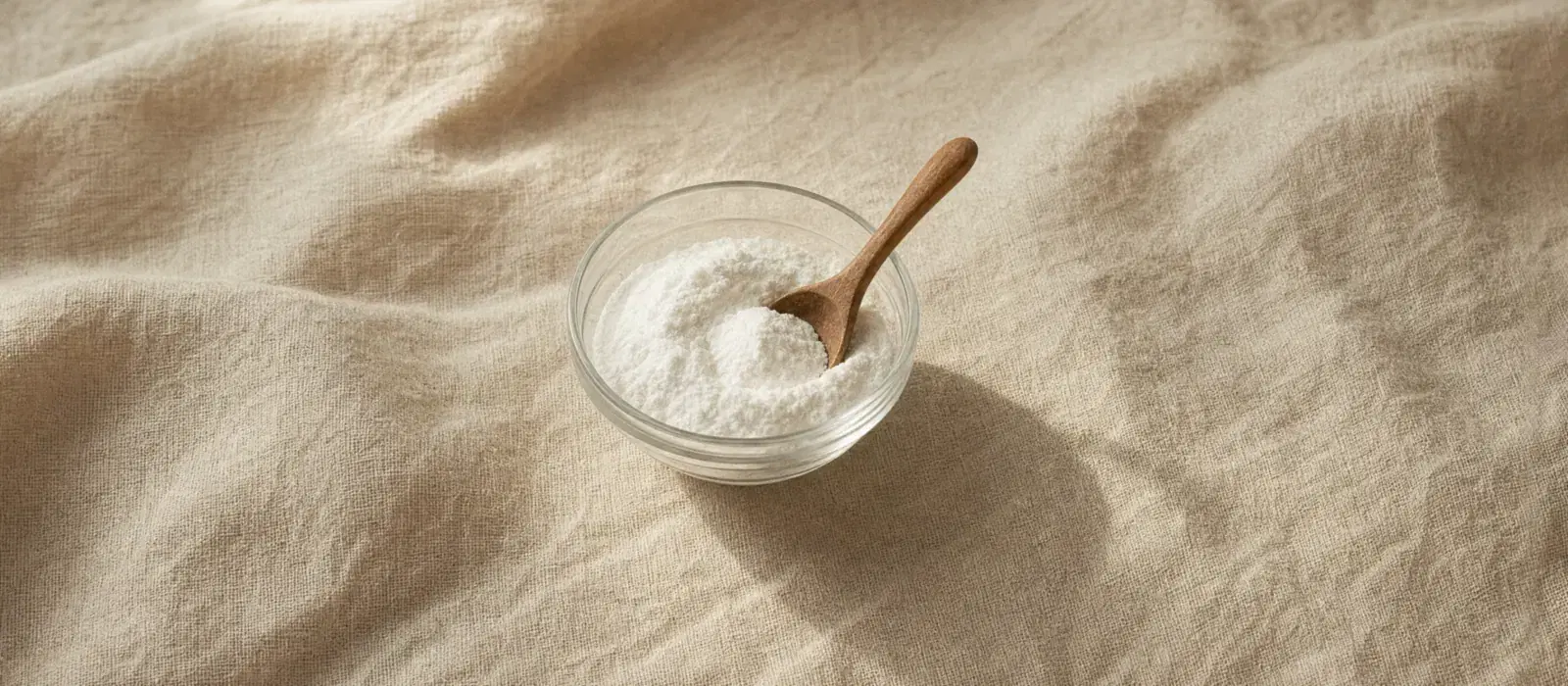
Reconstitution means adding a sterile liquid to a freeze-dried powder so it can be injected. Many peptides ship as powder because they keep better dry. The drug's label or the pharmacy names the liquid. The pharmacy mixes it or tells you how, and sets how long the mixed vial may be used.1,2
This guide explains the words on a vial and a pharmacy label. It does not give mixing steps. Those come from your prescriber and pharmacist, and they differ from one product to the next.
Why peptides ship as powder
Peptides are short chains of amino acids. Many break down in water over time. Freeze-drying (lyophilization) takes the water out of a frozen product by turning the ice straight into vapor. What is left is a dry cake or powder that stays stable far longer.1 One approved peptide medicine, tesamorelin, comes this way. It is a powder kept at room temperature in its box. It is mixed only when it is time to use it.2
Freeze-dried does not mean sterile. Sterility depends on how the product was made, filled and tested.
Bacteriostatic water vs sterile water
Two liquids come up most often. They look the same in the vial, but they are labeled for different jobs.
| Point | Bacteriostatic water | Sterile water |
|---|---|---|
| What it is | Sterile water with 0.9% or 1.1% benzyl alcohol, a preservative3 | Sterile water with no preservative4 |
| Vial type | Multiple-dose. Labeled only to dilute or dissolve drugs as the drug maker directs3 | Single-dose. Leftover liquid is thrown away4,5 |
| Label warning | Not for use in newborns3 | Injected into a vein on its own, it can damage red blood cells4 |
One is not a stand-in for the other by default. The drug's own label decides which one is used.
Who sets the use-by date
Once a vial is mixed or punctured, the printed expiration date no longer tells the whole story. A pharmacy sets a beyond-use date. After that date, the mix should not be used. USP sets the standard for sterile compounding. Under it, a multiple-dose vial gets a limit once it is first punctured. It must not be used past its beyond-use date or 28 days, whichever is shorter.7 CDC gives the same 28-day limit unless the maker states otherwise.5

Some products have a shorter limit. The bacteriostatic form of tesamorelin is thrown away 7 days after mixing.6 The bacteriostatic water label says not to store mixed liquids unless the drug's directions allow it.3 CDC adds that leftovers from single-dose vials should never be pooled or saved for later.5
How long a mixed or punctured vial may be used
Where research vials go wrong
Mixing a vial has to be done in a sterile way. CDC asks clinicians to use aseptic technique, which keeps germs out, every time.5 Even licensed pharmacies can get this wrong. In January 2026, FDA wrote to one that had released drug products that failed sterility testing.8
Research sellers add a different problem. FDA told one seller that the bacteriostatic water it sold beside its peptides is a drug. It faulted another for marketing that water as the liquid to mix its products in.9,10
Questions to ask your pharmacy
Ask whether the pharmacy mixes the product or sends powder for you to prepare. Ask which liquid the directions name. Get the beyond-use date in writing, and ask how to store the vial before and after mixing. Ask what to do with leftover liquid. If a word on the label is new to you, the peptide glossary explains it.
The short version
Reconstitution turns a stable powder into a liquid you can inject. The label and the pharmacy decide how, with what, and for how long.
- Follow the label. Bacteriostatic and sterile water are labeled for different jobs.
- Watch the date. A mixed or punctured vial has a beyond-use date, often far sooner than the printed expiry.
- Skip the research kit. Powder and water sold for research come with no prescriber, no pharmacist and no pharmacy label.
Thinking about BPC-157? At sipra, a physician reviews your health history first and decides whether a prescription fits you. If it does, a licensed pharmacy fills it, and the questions above still apply. BPC-157 is compounded and not FDA-approved. See how BPC-157 works at sipra.
Explore your BPC-157 options
- Online evaluation by a licensed clinician
- Treatment based on your health and goals
- Clear pricing before you commit

Frequently asked questions
Was this helpful?
Keep reading
 Healing & Recovery
 Healing & Recovery
 Healing & Recovery
 Healing & Recovery
 Healing & Recovery
 Healing & Recovery
Sources
- Joshi S, et al. Mini review on the lyophilization: a basic requirement for formulation development and stability modifier. Assay and Drug Development Technologies, 2025;23(4):180 to 194. Accessed November 10, 2026. pubmed.ncbi.nlm.nih.gov
- DailyMed. EGRIFTA SV (tesamorelin for injection) prescribing information. Accessed November 10, 2026. dailymed.nlm.nih.gov
- DailyMed. Bacteriostatic Water for Injection, USP (Hospira) label. Accessed November 10, 2026. dailymed.nlm.nih.gov
- DailyMed. Sterile Water for Injection, USP (Cardinal Health) label. Accessed November 10, 2026. dailymed.nlm.nih.gov
- Centers for Disease Control and Prevention. Injection safety: clinical safety for healthcare providers. Accessed November 10, 2026. cdc.gov
- DailyMed. EGRIFTA WR (tesamorelin for injection) prescribing information. Accessed November 10, 2026. dailymed.nlm.nih.gov
- United States Pharmacopeia. General Chapter 797 frequently asked questions, December 2023. Accessed November 10, 2026. pages.usp.org
- U.S. Food and Drug Administration. Warning letter to Boothwyn Pharmacy LLC, January 16, 2026. Accessed November 10, 2026. fda.gov
- U.S. Food and Drug Administration. Warning letter to Gram Peptides, March 31, 2026. Accessed November 10, 2026. fda.gov
- U.S. Food and Drug Administration. Warning letter to Peak Performance Peptides, August 24, 2026. Accessed November 10, 2026. fda.gov
- U.S. Food and Drug Administration. Compounding and the FDA: questions and answers. Accessed November 10, 2026. fda.gov