Sleepmaxxing, Reviewed: Which Trends Have Science Behind Them and Which Do Not
The short answer: Sleepmaxxing is the social-media push to optimize sleep with stacked habits and gadgets. A few of those habits are backed by solid research, like a steady schedule, a cool dark room, and a morning light dose. Others, like mouth taping, carry thin evidence and real downsides. Sort by science, not by view count.
- Which sleepmaxxing habits hold up under research
- Which ones are mostly theater
- Why mouth taping deserves a second look before you try it
- The two-minute test for any new sleep "hack"
The habits that actually earn the hype
Start here, because this is the part worth your time. The science-backed core of sleepmaxxing is not new. It is the boring stuff your body has always needed, repackaged with better lighting.
A consistent sleep and wake time is the single most reliable lever. Your circadian clock runs on regularity, and the American Academy of Sleep Medicine recommends adults get at least 7 hours on a regular schedule1. Going to bed and rising at the same time, weekends included, beats almost any product you can buy.
Morning light is the second pillar. A dose of bright light early in the day anchors your internal clock and helps you feel sleepy at the right hour that night2. Step outside. No app required.
Then keep the bedroom cool, dark, and quiet. Your core temperature has to drop for sleep to deepen, so a cooler room helps the process along3. These three habits are free, and they do the heavy lifting.
The gadgets and gimmicks that mostly sell vibes
Here is the contrarian read. A lot of the viral gear works on the margins at best, and only after the basics are in place. The basics are not for sale, so they get less screen time.
Take blue-light theater. Screens at night can suppress melatonin and nudge your clock later, and the evidence for cutting evening light is reasonable4. But "blue-light blocking" glasses worn over a bright, stimulating phone are a half-measure. The dimming and the earlier cutoff do the real work, not the tinted lens alone.
Weighted blankets, pink-noise machines, fancy mattresses, and mineral mocktails live in a softer zone. Some people sleep better with them. The research is thin or early, and the effect, where it shows up, is small. None of that is a scam. Just do not expect a blanket to outrank a wrecked schedule.
The two-minute test for any new hack: Does it support a known mechanism (a steady clock, lower light, a cooler body, less arousal)? Or does it just sound science-y? If it cannot name the mechanism, treat it as a maybe, not a must.
Mouth taping: the one to slow down on
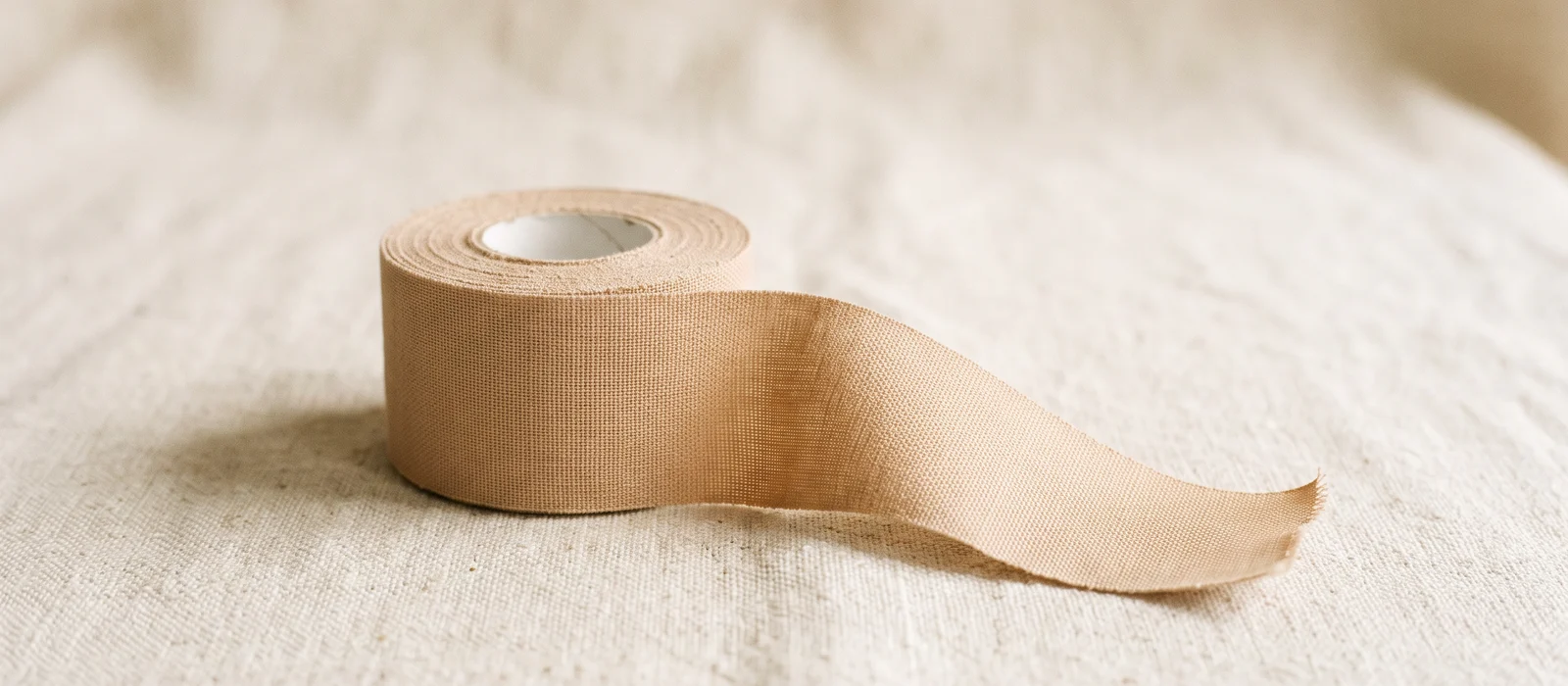
This is the trend that needs a real pause. Mouth taping, sealing your lips to force nose breathing, went massively viral, but the evidence is limited and the safety picture is mixed.
A 2025 review in the journal PLOS One found little quality evidence that mouth taping helps, and flagged a genuine risk for people with undiagnosed sleep apnea, where blocking the mouth could make breathing worse, not better5. Snoring, gasping, or daytime exhaustion are not problems to tape over. They are reasons to get evaluated by a clinician. Individual results vary, and a trend cannot screen you for a breathing disorder.
The demand is real. Searches and content around sleep optimization surged into early 2026, and the global sleep-aids market was valued near $78 billion in 2023 and is projected to keep climbing6. A market that big attracts good science and pure marketing in equal measure. Your job is to keep them separate.
How to choose what to trust
Quietly, this is also how to judge a sleep clinician or program, not just a TikTok. A good provider starts with your schedule, your light exposure, and your breathing before reaching for anything to sell you. They screen for apnea instead of taping over it. They tell you what is evidence-based and what is experimental, in plain words, before you spend a dollar. If a brand leads with a gadget and skips the basics, walk away. (This is how sipra is built.)
The closer
Sleepmaxxing got one big thing right: sleep is recovery, and it is worth optimizing. It got one big thing wrong: the answer is rarely a purchase.
Your three-step action stack: 1. Lock a single sleep and wake time and hold it for two weeks, weekends included. 2. Get bright light in the first hour you are awake, and dim the lights an hour before bed. 3. Before you tape, clip, or buy anything, ask if it names a real mechanism, and get any snoring or daytime fatigue checked by a clinician. If you want a provider that starts with the science instead of the merch, that is the bar sipra holds itself to.
Sort by science, not view count
Sleepmaxxing got one thing right: sleep is recovery and it is worth protecting. It got the ranking wrong.
- Do the boring three. Steady schedule, cool dark room, morning light.
- Slow down on taping. Thin evidence, real downsides, and unassessed breathing problems underneath.
- Test any new trend. Ask what the evidence is, who profits, and what happens if it fails.

Your next-generation biohacking toolkit
- Same-day doctor visits and prescriptions
- Longevity, recovery, performance & cognitive therapy
- Pharmacy grade, U.S. compounded peptides
*Your Sipra membership is included at no extra cost. From price shown is the 12-month plan rate.
Frequently asked questions
Sources
- American Academy of Sleep Medicine. "Healthy Sleep Habits." Updated 2024. sleepeducation.org
- National Institute of General Medical Sciences. "Circadian Rhythms." Reviewed 2023. nigms.nih.gov
- National Heart, Lung, and Blood Institute. "Sleep Deprivation and Deficiency: Healthy Sleep Tips." Updated 2022. nhlbi.nih.gov
- Harvard Health Publishing. "Blue light has a dark side." Updated July 7, 2024. health.harvard.edu
- Nguyen, B.K., et al. "Mouth taping for sleep: a systematic review." PLOS One, 2025. journals.plos.org
- Grand View Research. "Sleep Aids Market Size, Share & Trends Analysis Report, 2024." Published 2024. grandviewresearch.com
Was this helpful?
Keep reading
 Healing & Recovery
 Healing & Recovery
 Healing & Recovery
 Healing & Recovery
 Healing & Recovery
 Healing & Recovery
 Healing & Recovery
 Men's Health