How to read a peptide vial
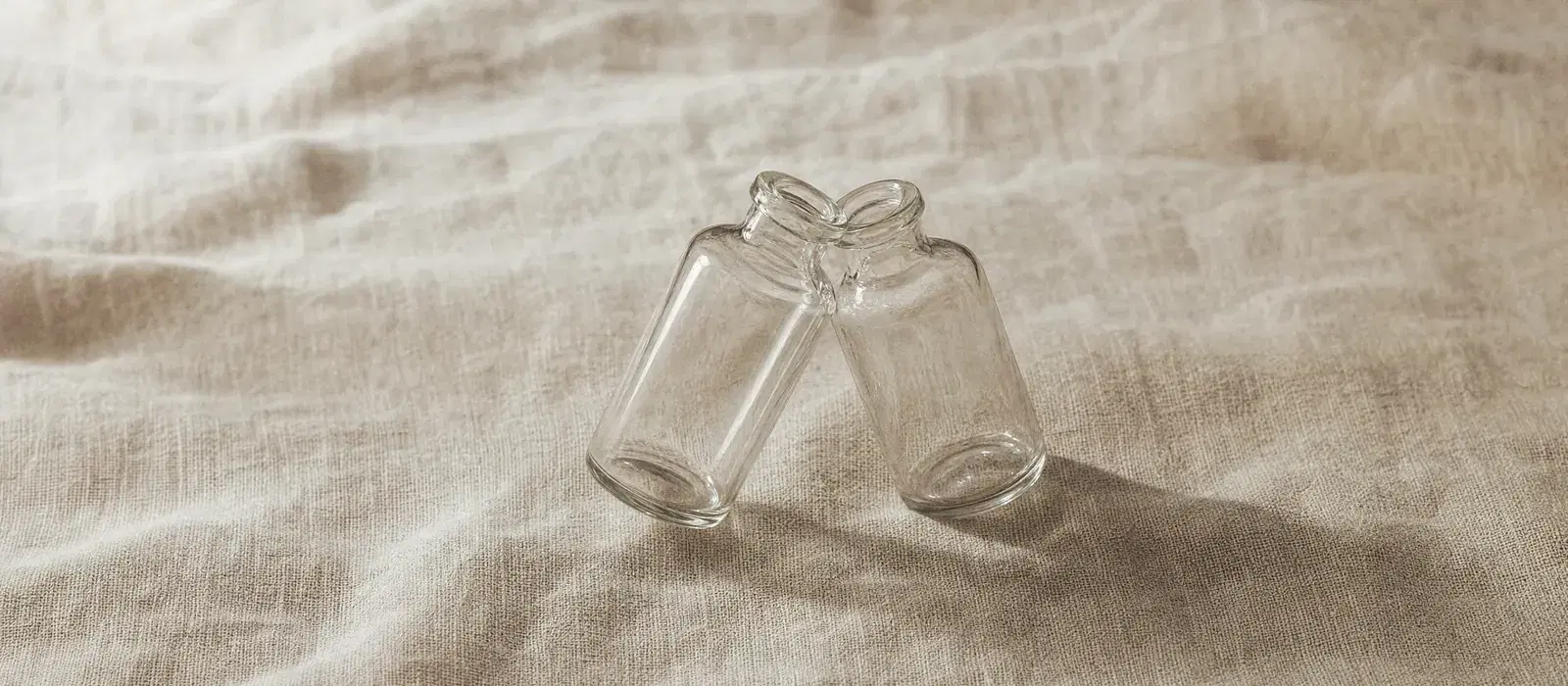
A peptide vial label gives you a few numbers: how much peptide is in the vial (mg), how much liquid it holds (mL), and often the strength of that liquid (mg per mL). A U-100 syringe adds one more: units. Concentration ties them together. Divide mg by mL and you have it.
"5 mg in 2 mL" means 2.5 mg of peptide in every mL of liquid. On a U-100 syringe, 1 mL is 100 units, so 10 units of that liquid hold 0.25 mg (250 mcg). Your dose comes from your prescriber; the label tells you how to measure it.
What you will learn
- What mg, mcg, mL and units each measure
- How to find the concentration from a label
- How to turn a written dose into syringe units, step by step
- The three mix-ups behind most measuring errors
Five terms, five different jobs
| Term | What it measures | Example |
|---|---|---|
| mg (milligram) | The amount of peptide | 15 mg in the vial |
| mcg (microgram) | The amount of peptide; 1 mg is 1,000 mcg | 600 mcg is 0.6 mg |
| mL (milliliter) | The volume of liquid | 5 mL of liquid |
| Units (U-100) | Syringe marks; 100 units fill 1 mL | 20 units is 0.2 mL |
| mg/mL | Concentration: peptide in each mL of liquid | 3 mg/mL |
Two of these measure the peptide itself: mg and mcg. Two measure the liquid: mL and units. Concentration is the bridge between them. That is why a dose written in mg cannot be measured until you know the concentration.2
Find the concentration first
Some vials arrive as a dry powder that is mixed with bacteriostatic water, which is sterile water with a preservative. Others arrive already in liquid. Either way, concentration is the amount of peptide divided by the volume of liquid.
A vial with 15 mg of peptide in 5 mL of liquid is 15 ÷ 5 = 3 mg/mL. A vial with 5 mg mixed into 2 mL is 2.5 mg/mL. If the label already prints a concentration, use the printed number.
From a written dose to syringe units
Here is the full calculation for a vial holding 15 mg in 5 mL, with a written dose of 0.6 mg. These numbers show the arithmetic. They are not a dose recommendation.
- Concentration: 15 mg ÷ 5 mL = 3 mg/mL.
- Volume: 0.6 mg ÷ 3 mg/mL = 0.2 mL.
- Units: 0.2 mL × 100 = 20 units on a U-100 syringe.
- Doses in the vial: 15 mg ÷ 0.6 mg = 25 doses.

If your dose is written in mcg, convert it first: divide by 1,000. A 250 mcg dose is 0.25 mg. At 2.5 mg/mL that is 0.1 mL, or 10 units.
Units measure liquid, not peptide
The marks on a U-100 syringe count hundredths of a mL. 10 units is always 0.1 mL and 50 units is always 0.5 mL, whatever is in the syringe. How much peptide those units carry depends on the concentration. The syringe units to mL chart lists every common mark.
| Concentration | 10 units hold | 20 units hold |
|---|---|---|
| 1 mg/mL | 0.1 mg (100 mcg) | 0.2 mg (200 mcg) |
| 2.5 mg/mL | 0.25 mg (250 mcg) | 0.5 mg (500 mcg) |
| 3 mg/mL | 0.3 mg (300 mcg) | 0.6 mg (600 mcg) |
| 5 mg/mL | 0.5 mg (500 mcg) | 1 mg (1,000 mcg) |
Three mix-ups to avoid
The FDA has received reports of people measuring compounded injectable medicines in the wrong unit, in some cases drawing several times the intended amount.1 Most of these errors come from one of three slips.
- mg and mcg. One is 1,000 times the other. 0.25 mg and 250 mcg are the same amount; 250 mg is not.
- Units and mg. 20 units is a volume. It holds 0.6 mg only at 3 mg/mL.
- The wrong syringe. These numbers apply to U-100 syringes only. Check the packaging.
Your next step. If BPC-157 is the vial on your mind, the measuring comes after a physician review, not before. At sipra, a physician reviews your health history before anything is prescribed. A licensed pharmacy fills the prescription, and its label gives the measuring directions. BPC-157 is compounded and not FDA-approved. See how BPC-157 is prescribed.
Explore your BPC-157 options
- Online evaluation by a licensed clinician
- Treatment based on your health and goals
- Clear pricing before you commit

Frequently asked questions
Was this helpful?
Keep reading
 Healing & Recovery
 Healing & Recovery
 Healing & Recovery
 Healing & Recovery
 Healing & Recovery
 Healing & Recovery